
Why New Hires Take Too Long to Find Their Footing
If new hires take too long to ramp up, the issue may not be the person. It may be unclear onboarding, scattered knowledge, and too much left to interpretation.
By Ashley Tudor • March 2026 • 5 min • Onboarding
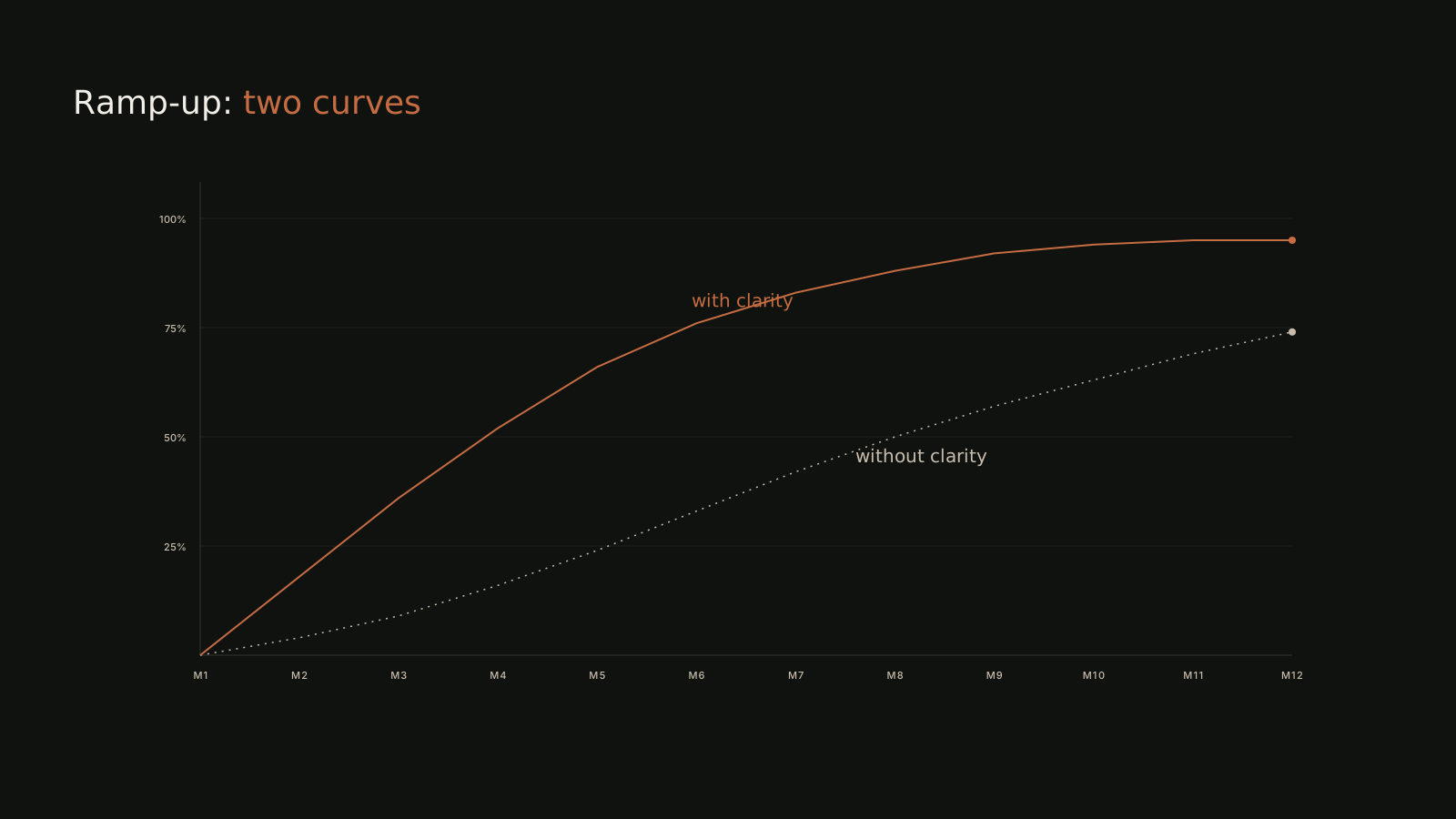
When a new hire takes longer than expected to settle in, it is easy to assume the issue is the person.
Maybe they aren't asking the right questions. Maybe they aren't catching on quickly enough. Maybe they aren't the right fit.
Sometimes that is true.
But in many small businesses, slow ramp-up has less to do with the person and more to do with the way the role is being introduced.
In other words, slow ramp-up usually has more to do with how the role is being introduced than with who the person is.
What messy onboarding usually looks like
A lot of small businesses don't have a formal onboarding system.
What they have is a mix of:
- shadowing
- verbal explanation
- scattered documents
- real-time correction
- “you’ll pick it up as you go”
That can work to a point. But it also asks new people to interpret too much too early.
They may be trying to figure out:
- what they actually own
- where information lives
- who to ask for what
- what order to learn things in
- what “good” looks like in this role
- when to decide and when to check first
Why new hires stay dependent longer
1. The role isn't visible enough
If the expectations for the role mostly live in someone’s head, a new hire has to reconstruct the job in real time. That is exhausting and slow.
2. Training depends on whoever has time
When onboarding is built around availability instead of structure, knowledge gets transferred unevenly. Important context gets skipped. People explain things differently. The new hire learns the role in fragments.
3. The business hasn't defined the early wins
If a new person doesn't know what a strong first week or first month looks like, they have a harder time building confidence.
4. Documentation is either missing or not usable
It's common to hear that “everything is documented” while new hires still feel lost. That usually means the issue isn't just whether documentation exists, but whether it is organized in a way that a real person can actually use.
5. The new hire is onboarding into ambiguity
If ownership, priorities, workflow, and escalation paths are all a little fuzzy, the new person is not onboarding into clarity. They're onboarding into interpretation.
What better onboarding looks like
Good onboarding doesn't have to be elaborate. But it should make a few core things easier to understand:
- What does this role own?
- What should they learn first?
- Where do they go for answers?
- What does a strong first week look like?
- What counts as an early win?
Confidence grows faster when success is made visible.
Why this matters
Slow onboarding isn't just inconvenient. It increases repeated questions, pulls managers and owners back into explanation mode, extends dependency, and delays confident contribution.
Over time, it also shapes how the business feels to new people. A role that is hard to interpret is harder to feel grounded inside.
Where to start
You don't need a giant onboarding manual to improve this.
A strong first step is making the first 30 days more visible. Start with:
- role ownership
- first-week priorities
- key resources
- key people
- common workflows
- what “good” looks like early on
Even small improvements here can reduce a surprising amount of friction.
A practical next step
If onboarding in your business feels overly dependent on verbal explanation, a Clarity Map can identify where the real friction lives before you invest in a larger onboarding build.
That shows whether the issue is role clarity, training flow, documentation, or a mix of all three.
Related reading
- When New Hires Take Too Long to Find Their Footing
- 10 Signs Your Business Has Outgrown Informal Systems
- Explore Services
This issue often shows up alongside broader system gaps as teams grow. For another angle on that pattern, read 10 Signs Your Business Has Outgrown Informal Systems.
If this pattern feels familiar, a Clarity Map can identify where the friction is actually coming from.
Posted on March 2026 • 5 min • Onboarding
If this sounds familiar
Slow onboarding usually means the role introduction is still too scattered and verbal. A Clarity Map can identify whether the drag is coming from unclear ownership, unclear workflows, or unclear structure around how the work should move.