Operational Breakdown
When everything keeps coming back to you.
Your team keeps routing questions, approvals, and decisions back to you. Work moves, but only when you're available to weigh in.
This is a realistic scenario, not a client case study.
Estimated read time: 5 min read
Problem
When the speed of your early days starts slowing the team down.
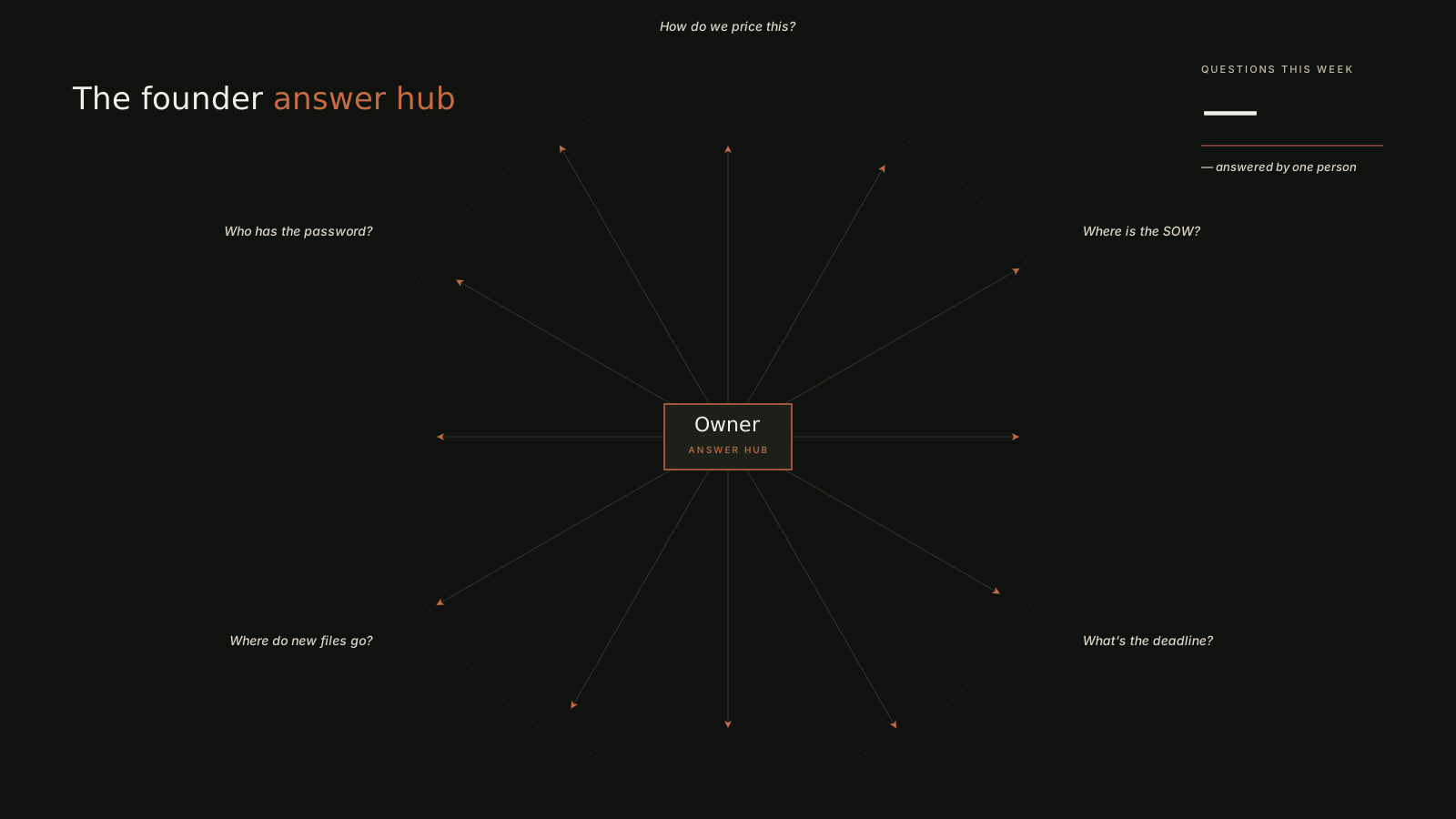
A service business has grown to 16 people. In the early days, quick answers from you helped everything move. Now the same habit is slowing the team down.
Team members still check with you before moving work forward. New hires rely on informal verbal guidance. Cross-functional decisions sit in Slack threads waiting on you.
What this looks like day to day
- Answers route upward People ask you for answers that could be handled elsewhere.
- Work pauses unnecessarily Projects stall when you're in meetings, traveling, or offline.
- Inconsistent decisions Similar questions get answered differently depending on the conversation.
- Managers hold back Managers are present, but decision boundaries are still too fuzzy to act confidently.
- Constant interruption load You feel overloaded by "small" questions that add up all day.
Why this happens
The team isn't the problem. The work is still too unclear to move without you.
Everything routes back to you when ownership isn't defined tightly enough, routine decisions don't have clear paths, and what your team needs to know still lives in your head instead of somewhere the team can find it.
- Role boundaries are too broad or too vague.
- Approval points aren't clearly separated from routine decisions.
- Recurring questions don't have a documented home.
- Managers aren't equipped to answer in your place.
What it costs
It quietly slows everything down.
The team becomes more cautious, work waits longer than it should, and growth adds more dependency instead of more capacity.
- Slower decision-making
- More interruptions for you
- Lower confidence across the team
- Inconsistent execution when answers vary by conversation
- Work that becomes fragile when you're unavailable
A calmer fix
Take the routine work off your plate without stepping back from leadership.
The goal isn't to step away from your business. It's to take the routine stuff off your plate by getting clearer about who owns what, how decisions get made, and where the team can find what they need.
- Identify the most common repeat questions and decision bottlenecks.
- Clarify ownership for the work that keeps coming back to you.
- Sort which decisions actually need you and which don't.
- Create simple guidance for recurring decisions and edge cases.
- Capture key operating knowledge in a shared, usable home.
- Set a communication rhythm that reduces reactive clarification.
What would get built
- Role clarity map A clearer ownership map across the functions where work keeps escalating upward.
- Decision-path guide A simple way to tell routine decisions from the ones that actually need you.
- Repeat-questions knowledge base A shared home for the questions that keep getting asked.
- Clarity Hub reference pages A usable operating reference for key decisions and workflows.
- Lighter communication rhythm A steadier way to stay in sync without sending everything back to you.
What better looks like
The team knows where to look before they ask.
Managers answer routine questions confidently. Fewer decisions stall waiting for your approval.
You still lead. But you're no longer the only path through which work moves.
What to do next
Start with the entry point that matches the real friction.
A Role Clarity Audit or a broader Operations Clarity build would be a strong first step, depending on whether the main issue is ownership confusion or broader operating friction.
If this pattern feels familiar
The structure may not have caught up with the way the business has grown.
If your team is running into situations like this regularly, it usually means responsibilities, workflows, or decision and communication loops have not evolved enough to carry the current pace of work.
A Clarity Block can pinpoint where the friction is really starting.
Next scenario
When New Hires Take Too Long to Find Their Footing
If this pattern sounds familiar, the next likely issue is slow ramp-up: new hires are capable, but onboarding still depends too much on informal guidance and scattered knowledge transfer.